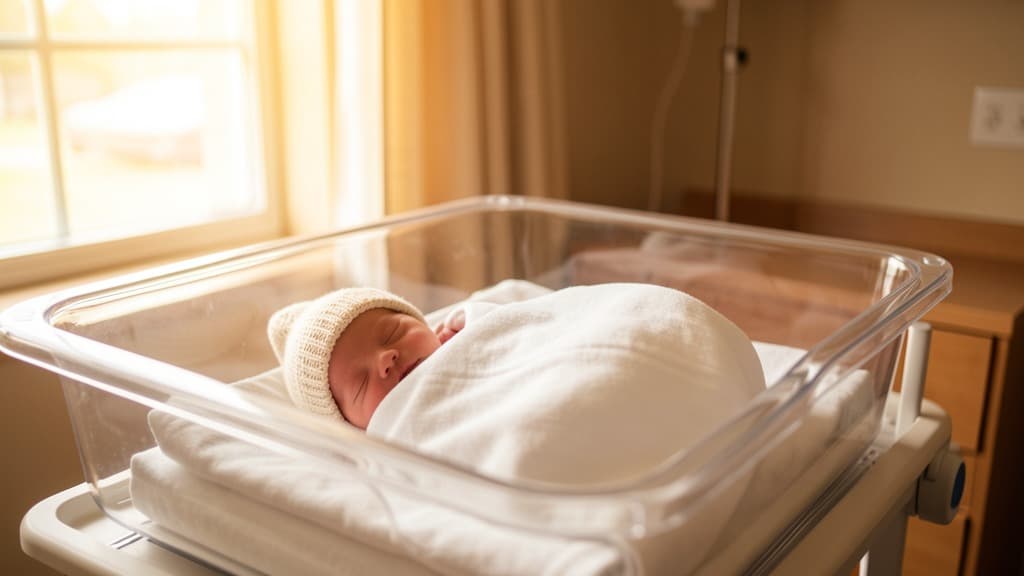
Why the First Two Weeks Matter
I've photographed newborns across Spring Lake, Fort Bragg, and Fayetteville for years now, and I'll tell you something every parent discovers the hard way: those first two weeks disappear. You're running on adrenaline and half-sleep, and suddenly your baby isn't a curled-up newborn anymore — they're stretching, their eyes are open longer, and they've already started to change.
The sweet spot for newborn photos is within the first 14 days. Here's why. Newborns at this stage still have that womb-curled flexibility. They sleep deeply — the kind of sleep where you can gently reposition a hand or tuck a blanket without waking them. Their skin has that fresh, peachy texture that hasn't yet gone through the normal newborn peeling. And honestly? You're still in the haze of new parenthood — the one where every tiny detail feels monumental, and every little yawn deserves documentation. That haze is precious, and it passes faster than you think.
Now, I know what you're thinking: Two weeks? I can barely shower in two weeks. I hear you. And here's the thing — I come to you. Your newborn session happens in your home, where you don't have to pack a diaper bag, wrangle a car seat, or worry about being anywhere on time. More on that in a moment.
When to Book Your Newborn Session
This is the advice I give every expecting parent who reaches out: book before your due date. I know it feels strange to schedule something for a baby who isn't here yet — but trust me, once that baby arrives, you will not be thinking about booking a photographer. You'll be thinking about sleep. And feeding. And whether you remembered to eat lunch.
I recommend reaching out in your second trimester. We'll pencil in a window around your due date and stay flexible. When baby arrives, you just send me a quick message — even at 2 a.m., I promise I won't mind — and we lock in the actual date within that first two-week window. This system has worked beautifully for dozens of families I've worked with. You get the peace of mind of having it handled, and you get the flexibility that newborns demand.
One more thing: if your baby is already here and you're reading this at week three or four, please don't panic. I've photographed six-week-olds and eight-week-olds and every session produced images the parents adored. The first two weeks are ideal, but they're not the only option. Reach out anyway. We'll make it work.
Preparing Your Home for an In-Home Session
Your home doesn't need to look like a magazine spread. I mean that. Some of the most beautiful newborn photos I've ever taken happened on a slightly wrinkled duvet cover with a pile of unfolded laundry just out of frame.
What I actually need is simple: light and a little space. I'll find the best light in your home — usually a master bedroom or living room with big windows — and we'll set up there. I might move a chair or push a side table aside, but you don't need to deep-clean or redecorate. In fact, I'd rather you didn't. Your home should look like your home. The nursery you spent months putting together, the rocking chair where you feed at 3 a.m., the sun coming through the window where you sit with your coffee — those are the details that will mean something to you in twenty years.
Light, Space, and Temperature
If you want to do a little prep, here's what actually helps. Open all your blinds and curtains before I arrive. Turn off overhead lights — natural window light is what I'm chasing. Crank up the heat a bit, especially if we're doing any bare-skin shots. Newborns run cold, and a warm room keeps them sleepy and content (the American Academy of Pediatrics has excellent guidance on safe environments for newborns — and safety always comes first in my sessions). Clear one surface — a bed, a couch, even a clean section of floor — where we can lay down a blanket. That's it. That's the whole setup.
One more tip that nobody tells you: have a white noise machine or app ready. It masks the sound of the camera shutter and keeps baby in that deep, peaceful sleep we want. If you don't have one, your phone works fine — just pull up a white noise track and set it nearby.
What Baby Should Wear (and What You Should Wear Too)
For baby, less is almost always more. A simple white onesie, a soft muslin swaddle, or nothing at all with just a wrap — these photograph beautifully and keep the focus where it belongs. Avoid busy patterns, logos, and anything with words. Those tiny details will feel dated in five years. The curve of their ear, the dimple at their knuckle, the way they curl their toes — those are the details that never expire.
I always bring a selection of wraps, swaddles, and blankets in soft, neutral tones. You're welcome to use yours, mine, or a mix. If there's a special blanket or a family heirloom — something your grandmother knitted, a quilt from your own nursery — bring it out. Those pieces tell your family's story in a way nothing else can.
For Moms and Partners
You're in these photos too. I know you're two weeks postpartum and nothing fits the way it used to and your body still feels foreign. I know. And I also know that when you look back at these images in ten years, you won't see what you're worried about now. You'll see the way you held your baby. The way your partner looked at you. The tiny hand wrapped around your finger.
Wear something you feel comfortable in. Soft, neutral tones photograph beautifully — cream, oatmeal, sage, dusty blue, warm gray. Flowy fabrics and knits work well. Avoid loud patterns and anything too stiff. And for the love of everything, don't buy something new the day before your session just because you think you should. Wear what makes you feel like yourself.
Feeding, Soothing, and Going With the Flow
Here's how a baby-led newborn session actually works: we follow your baby's lead completely. If they're hungry, we feed. If they need soothing, we soothe. If they're wide awake and staring at the ceiling, we capture that too. There is no schedule and there is no rushing. For more on this approach, I've written a whole guide on what a baby-led newborn session looks like.
Plan to feed right before I arrive, or right when I get there. A full baby is a sleepy baby, and a sleepy baby gives us those peaceful, curled-up images everyone loves. But if baby decides they're hungry again twenty minutes in — which they will, because newborns — we stop. I'll use that time to photograph the nursery details, or your partner and other children, or just the quiet in-between moments.
A few practical things to have ready: burp cloths (more than you think you'll need), extra diapers and wipes within arm's reach, a pacifier if your baby takes one, and a change of clothes for baby — blowouts happen, and they always happen during photo sessions. It's basically a law of physics.
And please, do not apologize. Not for feeding, not for crying, not for the mess. Newborn sessions are messy by nature, and I've seen it all. Your only job is to take care of your baby. My job is everything else.
Including Siblings Without the Stress
If you have older children, I know you're probably more worried about them than the newborn. Toddlers are unpredictable. They might be obsessed with the baby or completely indifferent. They might cooperate beautifully or throw themselves on the floor the moment I raise my camera. All of it is normal, and all of it is okay.
Prepping Your Older Child
Talk about the session beforehand, but keep it light. Frame it as a special time where they get to show off their new baby. Let them pick one thing — their outfit, a toy to show the baby, the spot on the couch where they want to sit. A little agency goes a long way with small children.
On the day of, make sure they've eaten and napped — the same advice I give for preparing for any family photoshoot. Have a non-messy snack ready as backup. And don't threaten consequences if they don't cooperate. I've watched that backfire more times than I can count. The best sibling photos happen when kids feel like they're part of something fun, not something they're being forced through.
If your toddler needs to run laps around the living room before they'll sit still for thirty seconds, we'll run laps. If they want to hold the baby for exactly four seconds and then go play with blocks, I'll shoot fast. I'm not here for perfection. I'm here for the real thing.
Why These Photos Matter More Than You Think
I had a mom tell me once that she almost canceled her newborn session. She was exhausted, her house was a wreck, and she felt like she looked terrible. She kept the session anyway, and three years later she told me those photos are the ones she reaches for every single time she wants to remember what those early days felt like.
Here's what I know: the newborn phase is so consuming that you're not really present for it. You're surviving it. The photos are what let you go back later and actually see it — the way your baby's head fit in the palm of your hand, the face your partner made the first time they held them, how tiny those feet actually were. You can't hold onto those details with memory alone. Nobody can.
Print Them. Seriously.
One thing I tell every family: print your photos. Digital galleries are wonderful for sharing with grandparents across the country, but digital files live on hard drives and cloud accounts and phones that get replaced every two years. A print lives on your wall. Your kids grow up seeing themselves in it. It becomes part of the landscape of your home. If you're on the fence about the investment, I wrote more about why professional photography pays dividends for a lifetime.
Your newborn will never be this small again. That's not a sentimental line — it's a biological fact. They'll double their birth weight before you know it. The scrunchy newborn face will smooth out. The fuzzy newborn hair will fall out and grow back differently. These photos are the only way to hold onto this version of them. And you'll want to. I promise you'll want to.